
Google Maps Glitch Floods Screens With Fake Accident Reports
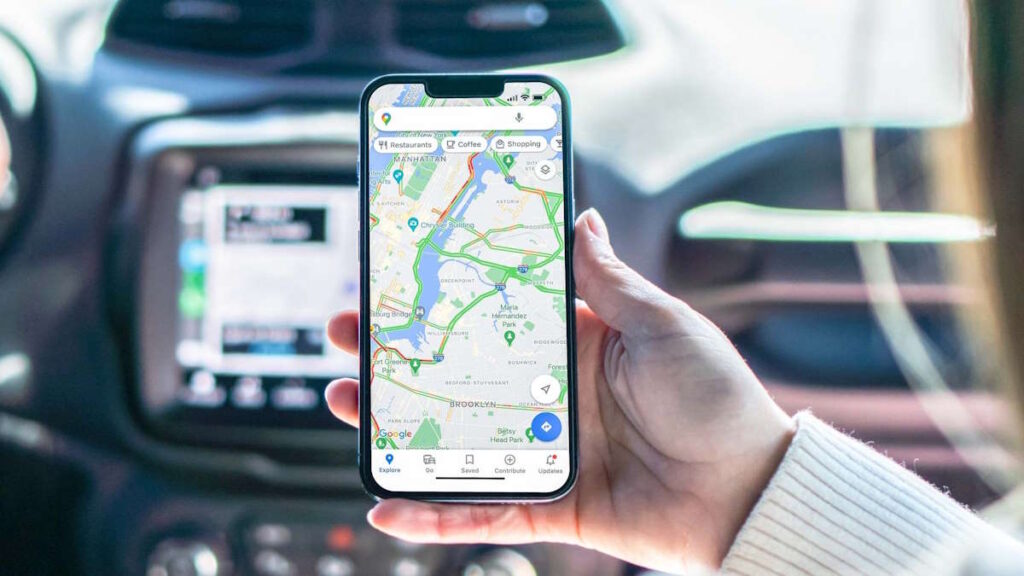
Google Maps users have reported an unusual glitch displaying large numbers of apparently false accident alerts across several US cities. The reports have raised concerns about the reliability of crowdsourced traffic information, although the exact cause of the problem has not been officially confirmed.
# Google Maps Glitch Floods Screens With Fake Accident Reports
Google Maps users have reported an unusual problem involving large numbers of apparently false accident alerts appearing on the navigation platform.
The issue has attracted attention after drivers in several US cities noticed crash reports on their maps despite seeing no obvious signs of accidents at the indicated locations.
The unexpected alerts have raised questions about the accuracy of real-time traffic information and how navigation applications process reports submitted by users.
Although Google Maps is widely used for route planning and traffic updates, the incident highlights the challenges of maintaining reliable information across a platform that depends partly on community contributions.
Drivers Report Unusual Accident Alerts
Reports shared online describe drivers encountering multiple accident notifications along relatively short stretches of road.
Some users said they passed the indicated locations without seeing emergency vehicles, damaged cars or other visible evidence of a collision.
Others reported seeing several alerts appear close together, making the map look as though numerous accidents had occurred simultaneously.
The reports have emerged from multiple locations in the United States, with users describing similar experiences in different cities.
However, an alert that appears inaccurate does not necessarily prove that an accident never occurred. Some incidents may be cleared before a driver reaches the location, while others may be reported imprecisely.
The unusual concentration of alerts has nevertheless led some users to suspect a technical problem or an issue with how traffic reports are being processed.
Why Could Google Maps Display Incorrect Reports?
Google Maps combines several sources of information to help users understand road conditions.
These include traffic data, road information and reports submitted by people using navigation applications.
Google has also integrated community reporting features from Waze into Maps. Depending on the location and available features, users may encounter reports originating from different applications.
This approach can make traffic information more comprehensive, but it also creates challenges.
Reports can become outdated, users may select the wrong incident category, and information may remain visible after circumstances have changed.
If a technical issue affects how reports are updated or removed, inaccurate alerts could potentially remain on the map longer than expected.
However, the precise cause of the latest incident has not been officially established. It would therefore be premature to conclude that a particular system or integration is responsible.
How False Alerts Can Affect Drivers
Incorrect accident reports can create confusion for people who depend on navigation applications during their daily journeys.
Drivers may slow down unnecessarily, change routes or expect significant delays because their maps indicate a problem ahead.
When several questionable alerts appear in succession, users may also become less confident in the platform's traffic information.
This matters because navigation applications are often used to make decisions quickly, particularly during busy commuting periods or when travelling in unfamiliar areas.
Accurate information is therefore essential, not only for convenience but also for helping drivers make informed decisions about their routes.
Google Maps and Waze Share Traffic Information
Google Maps and Waze both use community contributions to provide information about road conditions.
Waze has traditionally placed a strong emphasis on driver-submitted reports, including information about accidents, hazards and other events affecting traffic.
Google Maps has gradually expanded its own incident-reporting features and can display reports from both communities.
Sharing information between the services can help users receive more detailed updates, but it also makes accurate reporting and timely removal of outdated information important.
A report may be useful when first submitted but become misleading if it remains visible after the situation changes.
At present, the available reports do not establish whether the recent incident originated from Waze submissions, Google Maps reports or another technical issue.
What Should Google Maps Users Do?
Drivers who encounter suspicious traffic alerts should avoid making sudden or unsafe manoeuvres based solely on a map notification.
Instead, they should follow road signs, obey traffic laws and make route decisions only when it is safe to do so.
Users can also check whether an alert appears recent, review any available details and compare information with other reliable sources when necessary.
If Google Maps continues to behave unexpectedly, updating the application may help resolve ordinary software problems, although an update is not guaranteed to fix a server-side issue.
Users should never interact with their phones while driving. Any checks or changes should be made after stopping in a safe location.
Has Google Confirmed the Problem?
The reports currently available do not establish an official explanation from Google for the apparent wave of false accident alerts.
Without a confirmed statement or technical investigation, the underlying cause remains uncertain.
It is also unclear how widely the issue has affected users, whether all reported alerts share the same cause or when the situation will be fully resolved.
The reports should therefore be understood as user observations rather than confirmation of a specific Google Maps malfunction.
The Importance of Reliable Navigation Data
The incident highlights a broader challenge for navigation services that rely on real-time information and community reports.
Crowdsourced data can help identify hazards quickly, but its usefulness depends on accuracy, verification and timely updates.
Navigation platforms must balance speed with reliability so that users receive helpful information without being overwhelmed by outdated or incorrect alerts.
For Google Maps, the key issue will be determining whether the reported pattern reflects a temporary technical problem, inaccurate community submissions or a combination of factors.
Until more information becomes available, drivers should continue using navigation tools carefully and treat unexpected alerts as information to assess rather than unquestionable facts.
Source: Pplware and publicly shared user reports. Independently adapted for NexaPulse.
Sources
Related News

MIT Develops Ultra-Thin Aquatic Robot That Swims Using Living Muscle Cells
Google Ads Can Now Generate AI Ad Previews in Just 30 Seconds
Apple Reportedly Plans a Second October Launch on October 27: New Macs and iPad Mini Expected